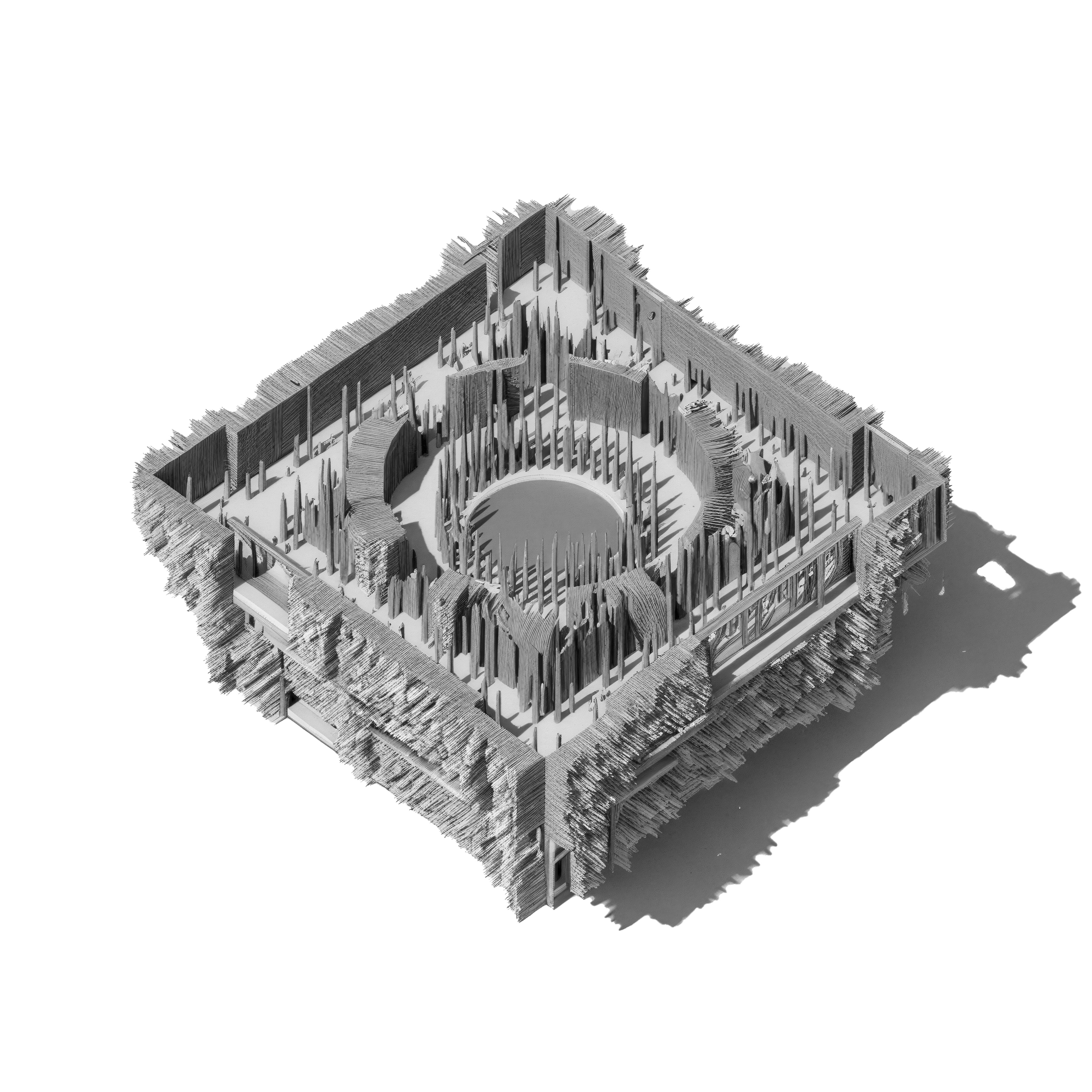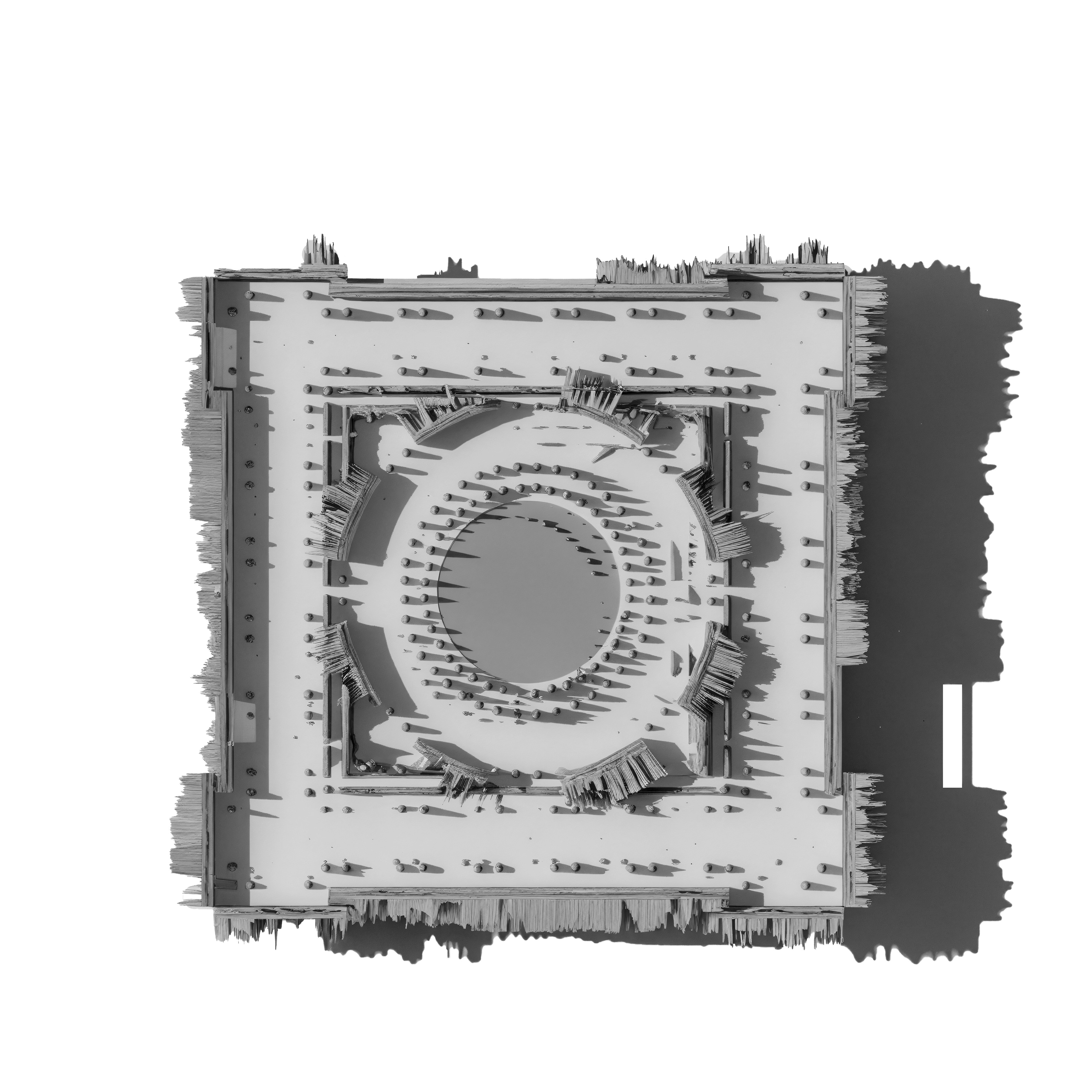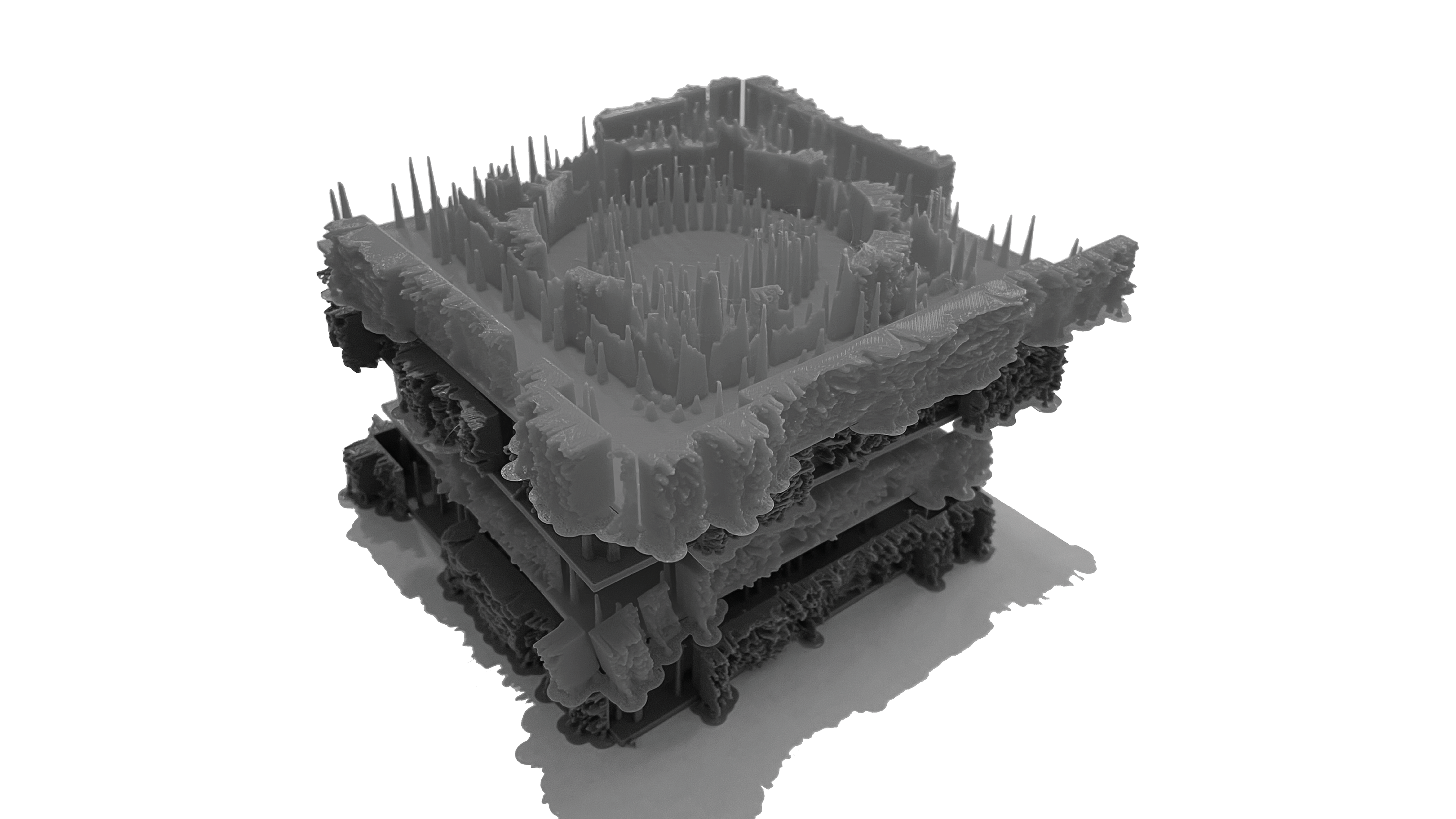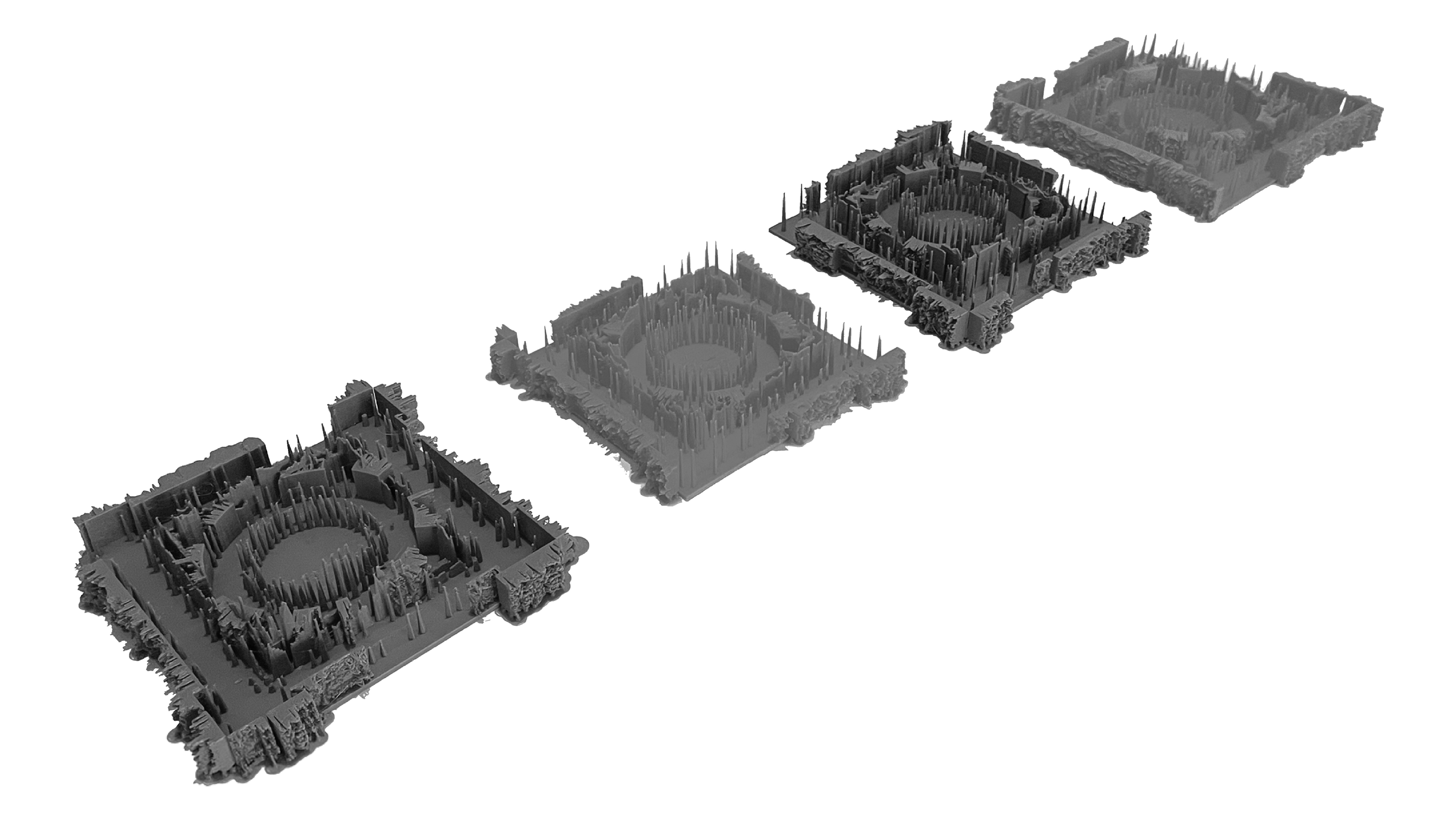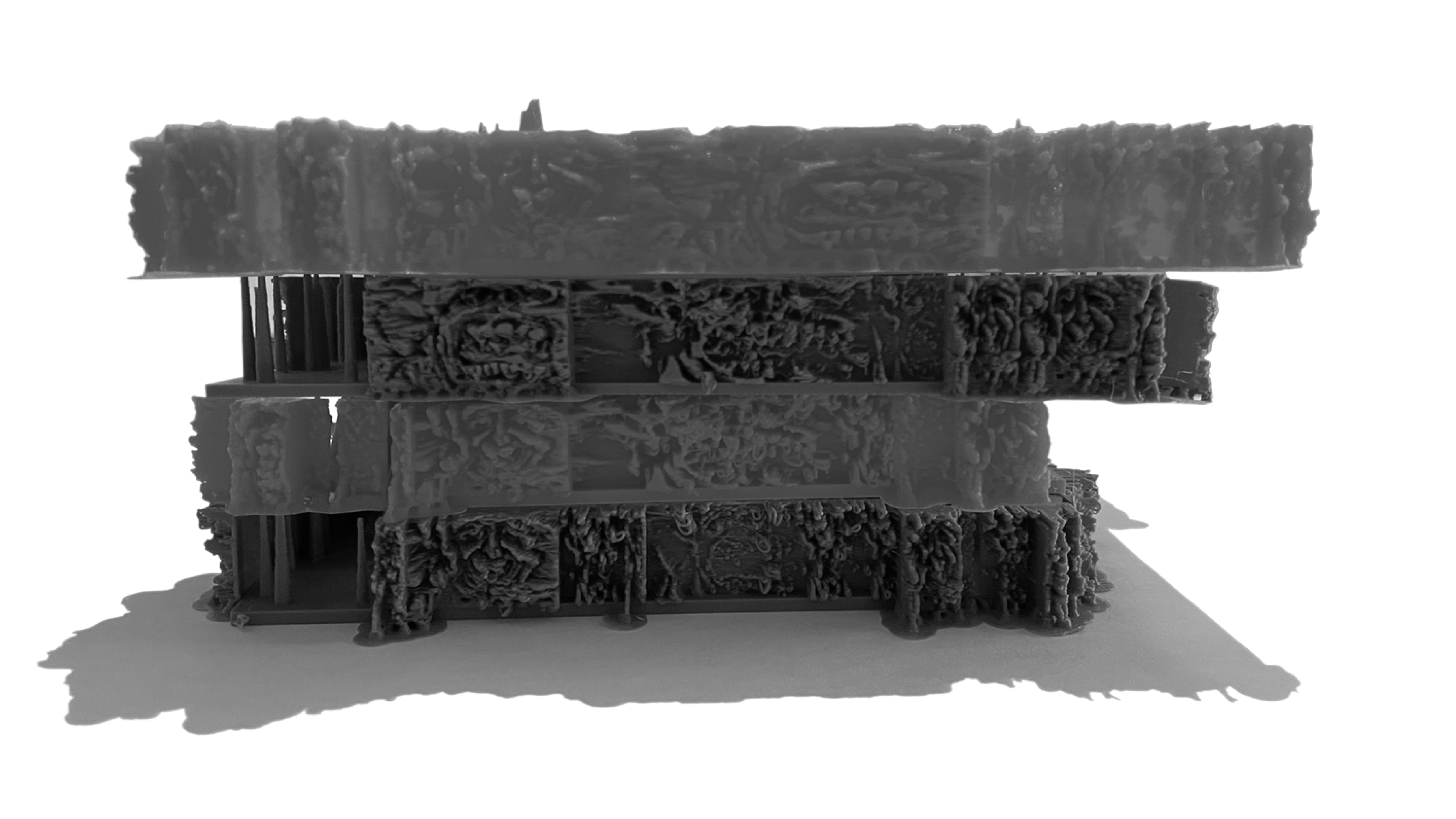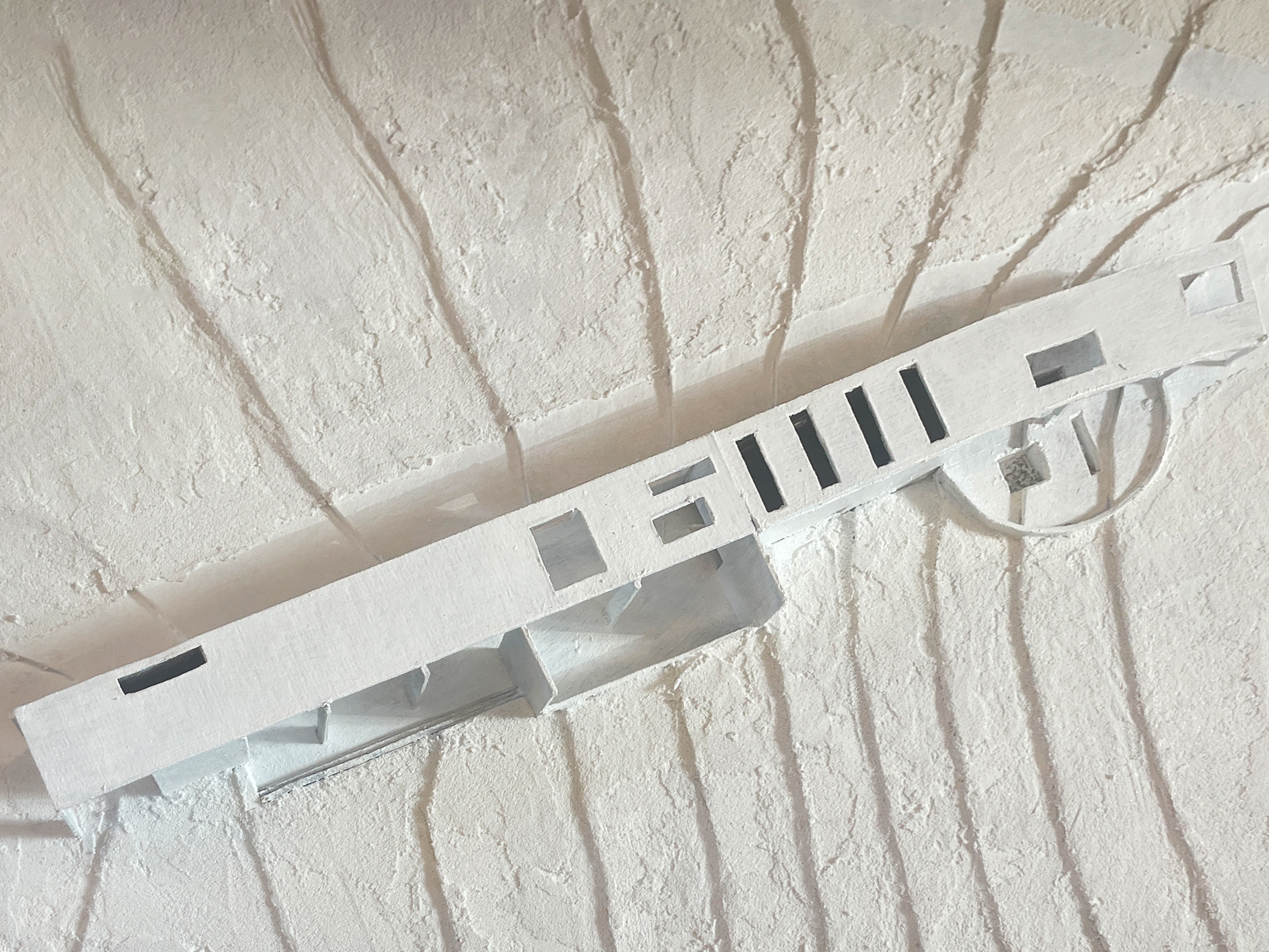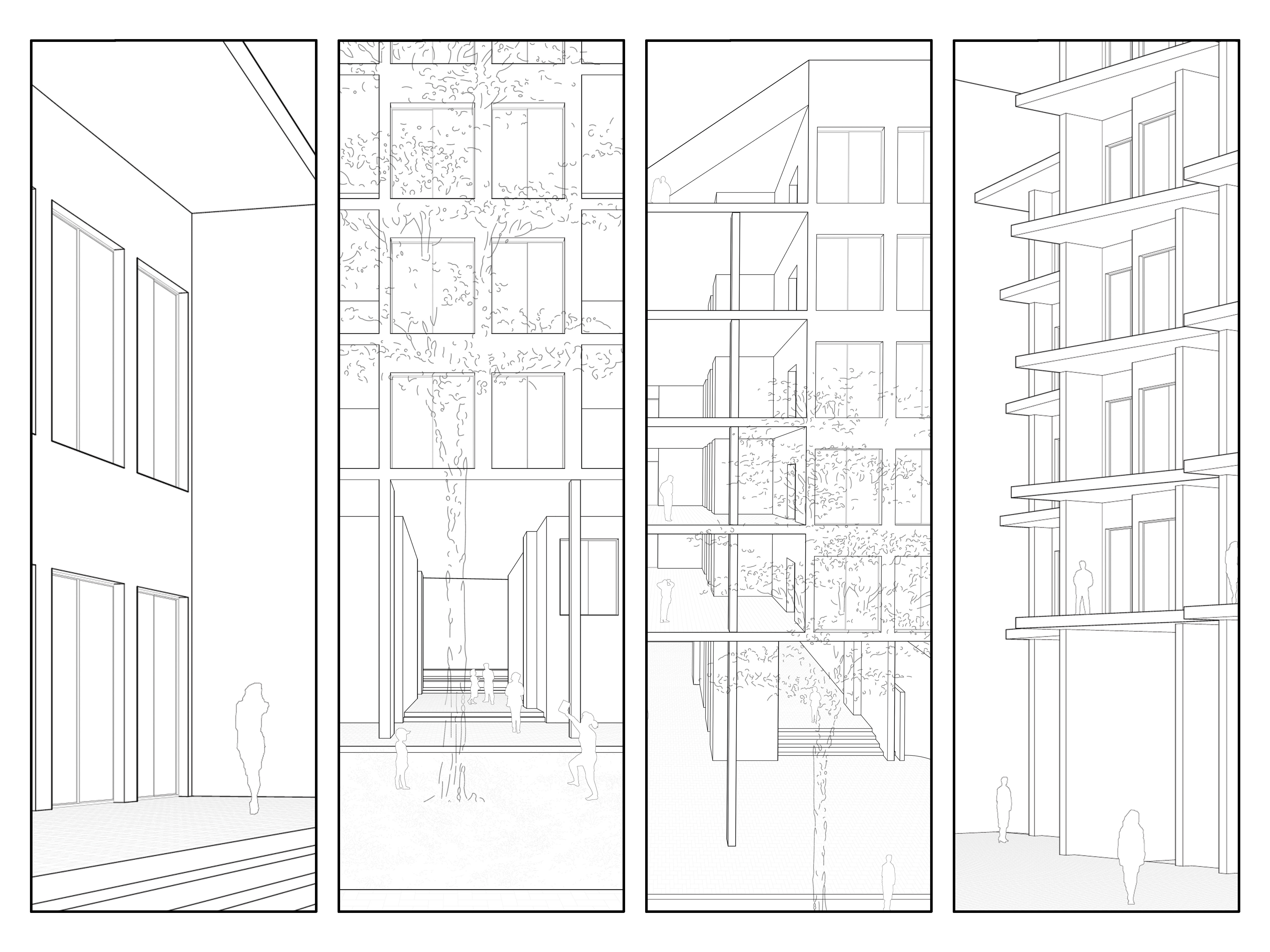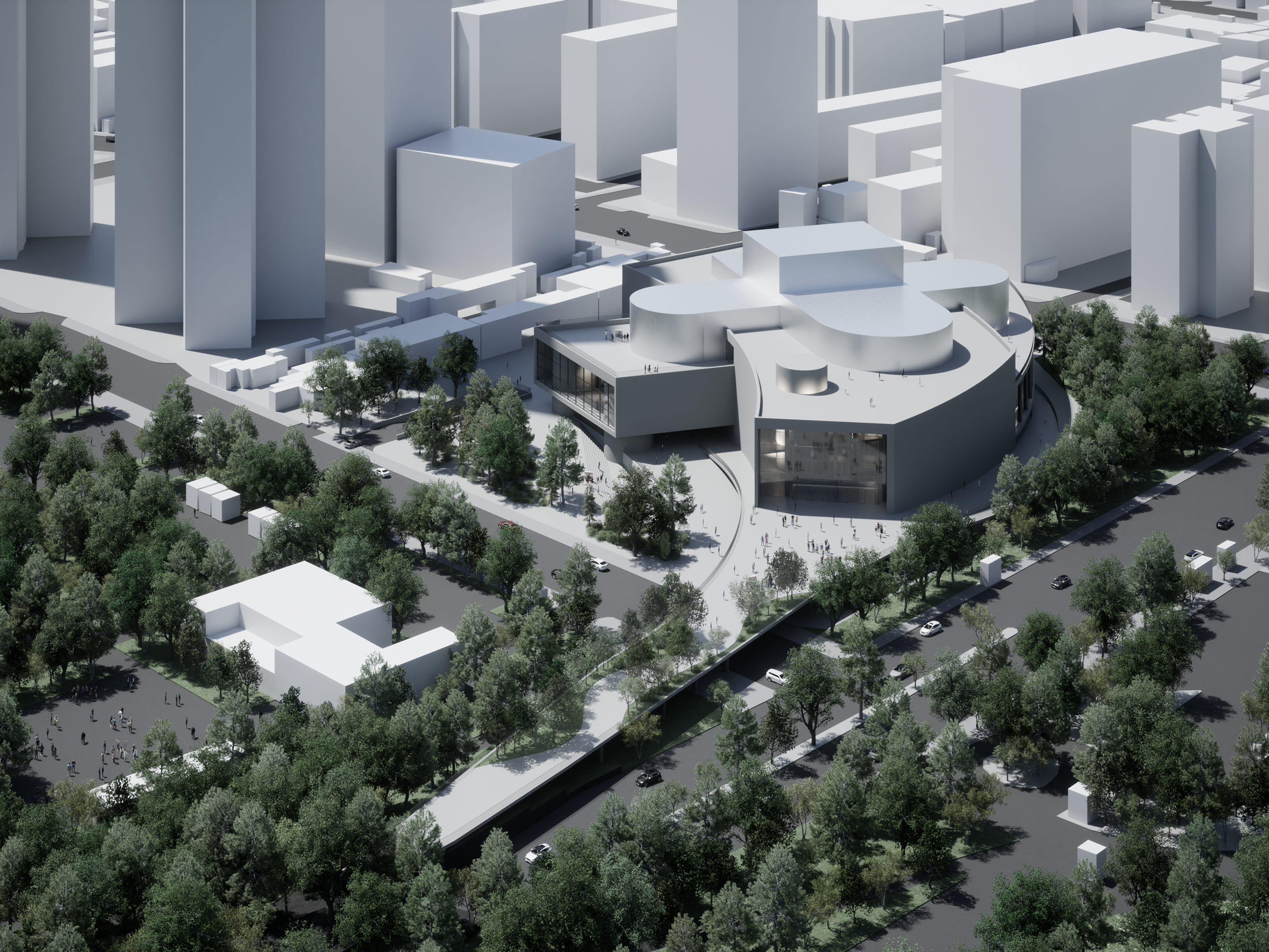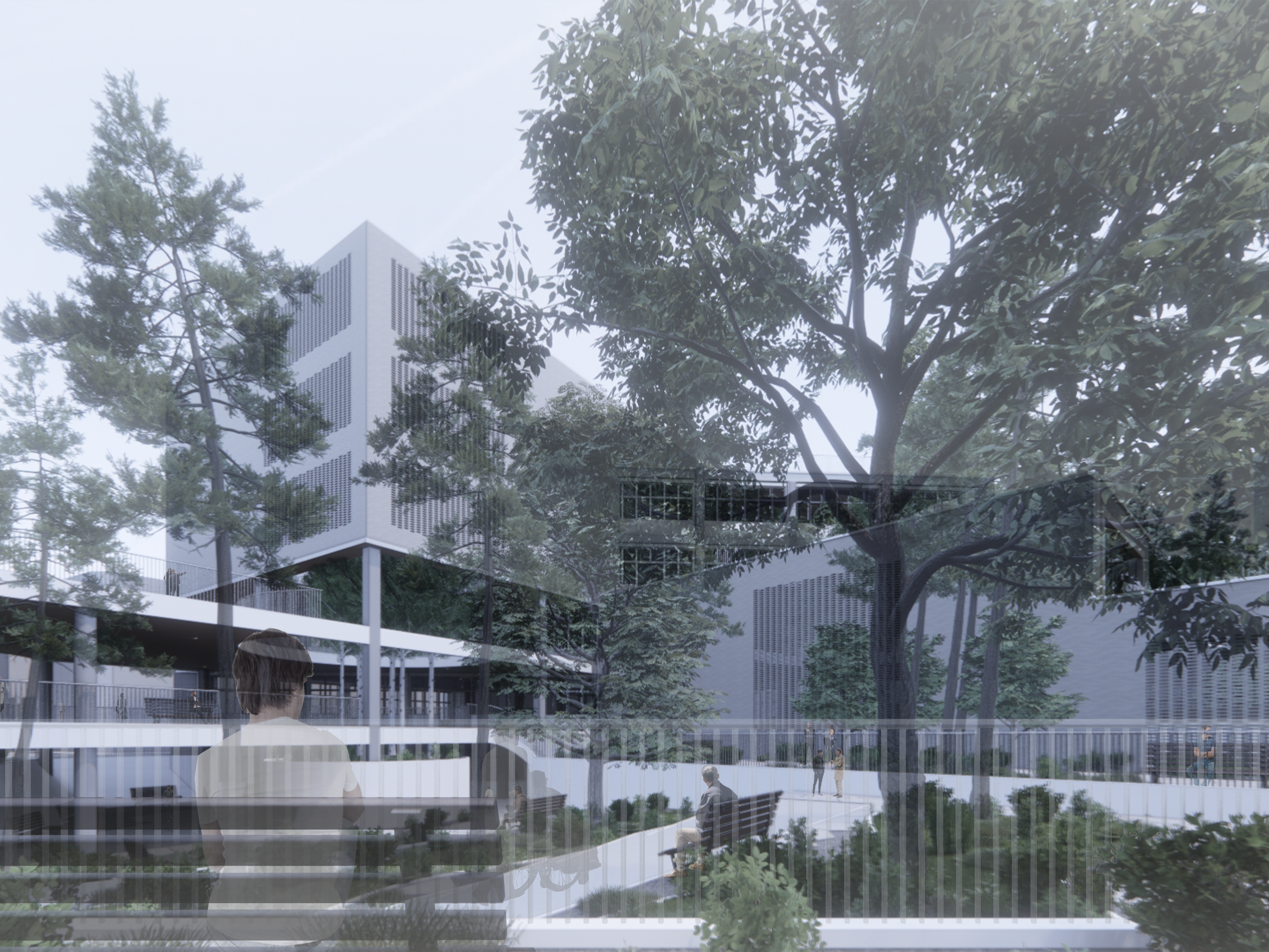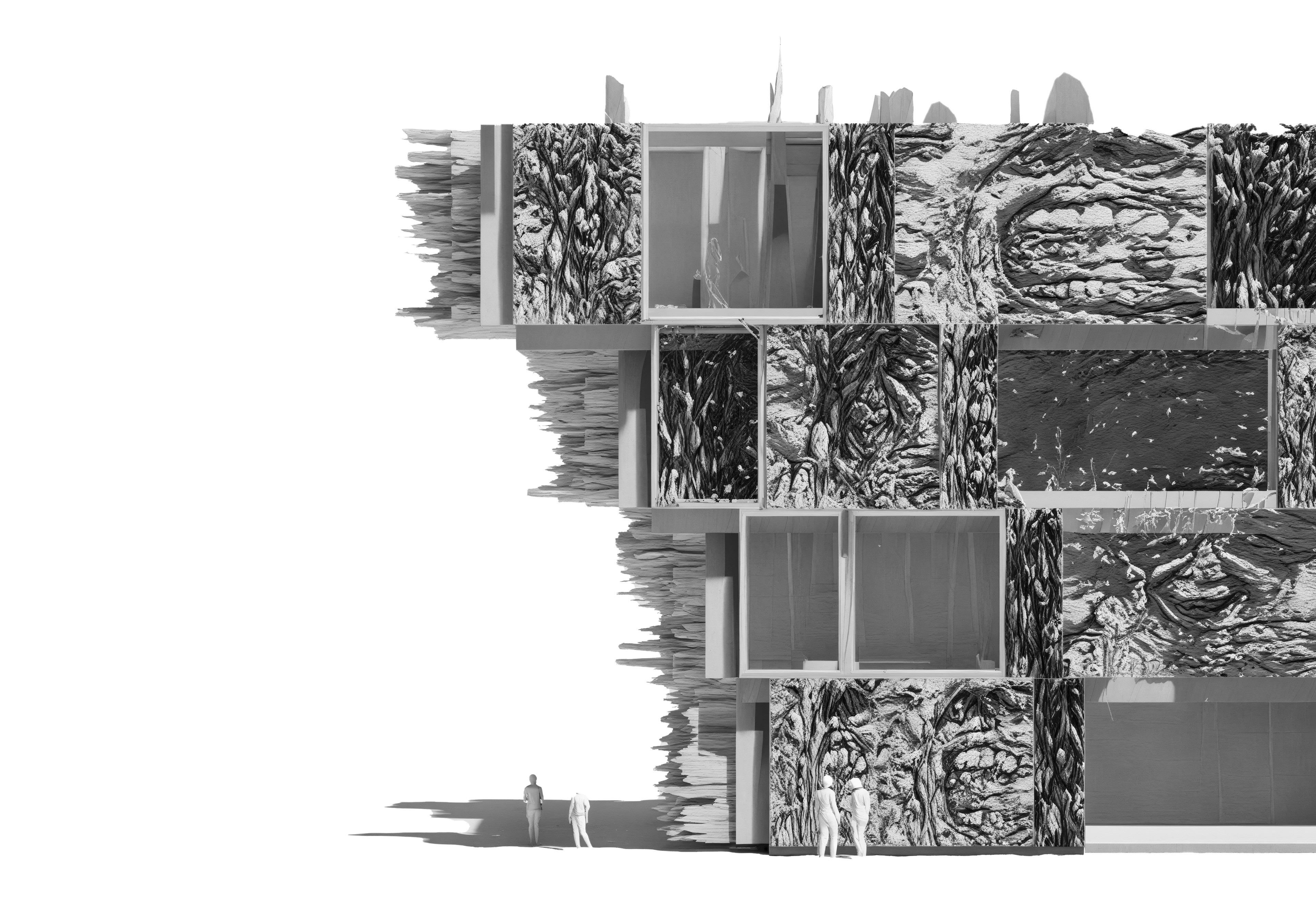
This project integrates image-driven design and displacement mapping to create complex architectural facades and systems. Drawing inspiration from the cover of the iconic album “In the Court of the Crimson King,” we blended two images- ”Schizoid Man” and the enigmatic “Crimson King.” Image data such as RGB inputs and blending proportions drive extrusion patterns and structural depth and are subsequently mapped to the facade system. The design applies four distinct image modes across four floor plates and window panels, creating varied textures and topologies. This process expresses the emotional tension between chaos and control, capturing themes of alienation, brutality, and melancholia in the resulting architectural forms. The project leverages displacement mapping to transform 2D images into intricate 3D designs, utilizing pixel intensity as a driver for spatial modulation. This project explores the potential of visual and emotional data as generative tools in architectural design, blending narrative expression with computational precision.
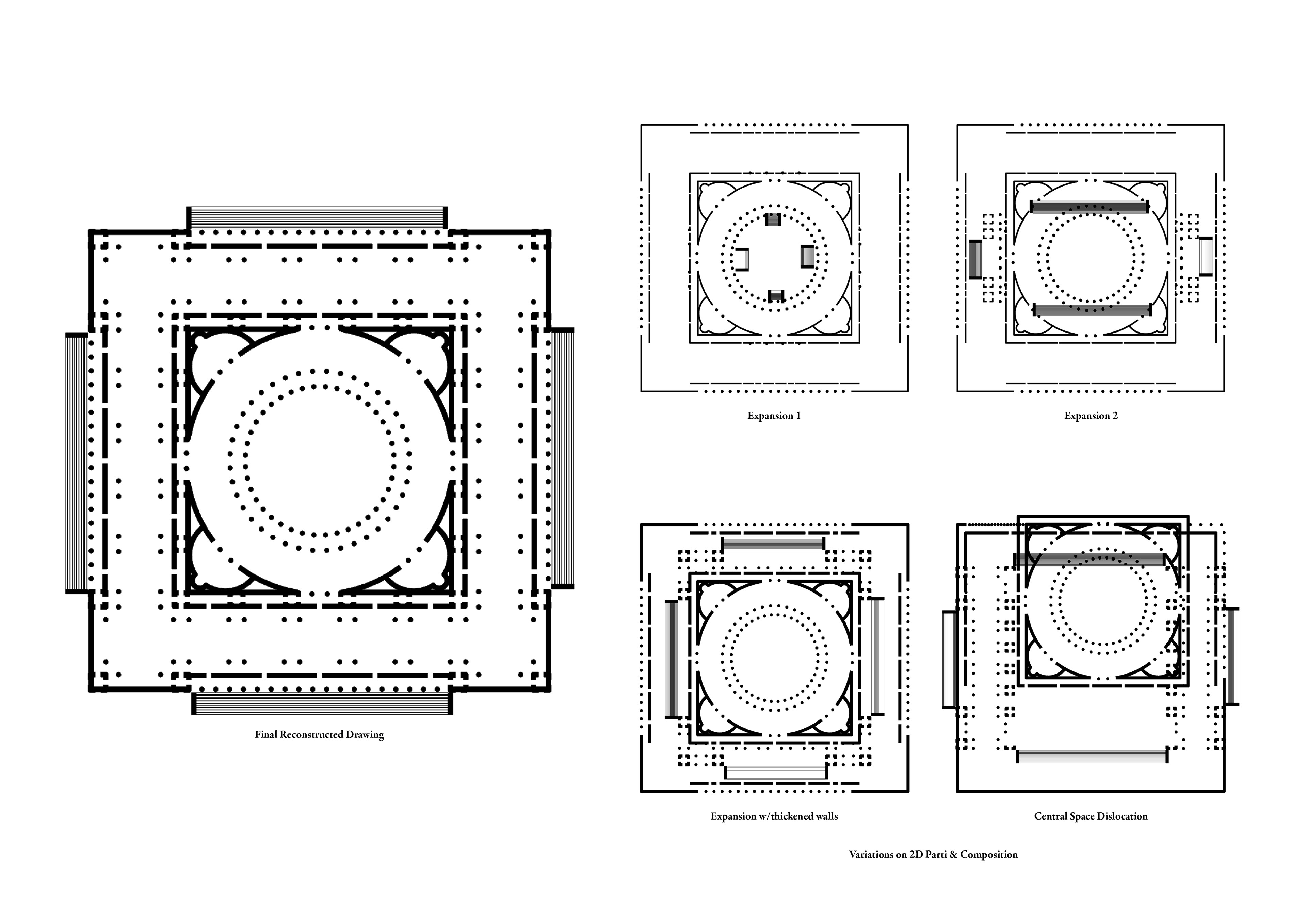
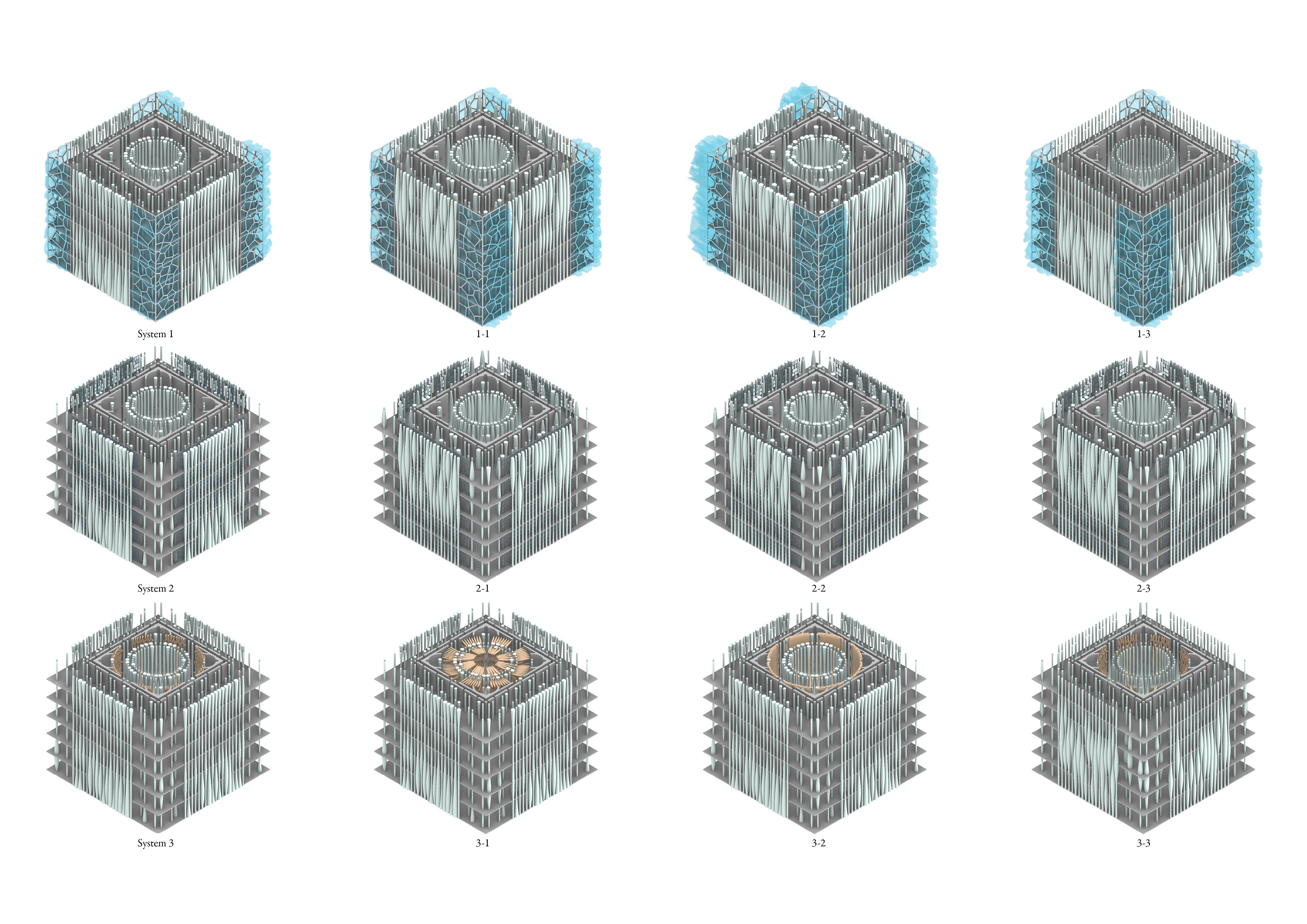
The project is symmetrical vertically and horizontally; this makes adjusting the parameters more aesthetically pleasing. We started expanding the exterior stairs and columns from the inside, as shown in the right variations. In this process, there are some instances where the staircases are located inside the walls in a sensible way, which we could utilize as an additional design iteration. In addition, the center point of the building is adjusted to follow a circle of a set radius. This creates instances where the inner wall plows through the outer, creating illogical spaces.
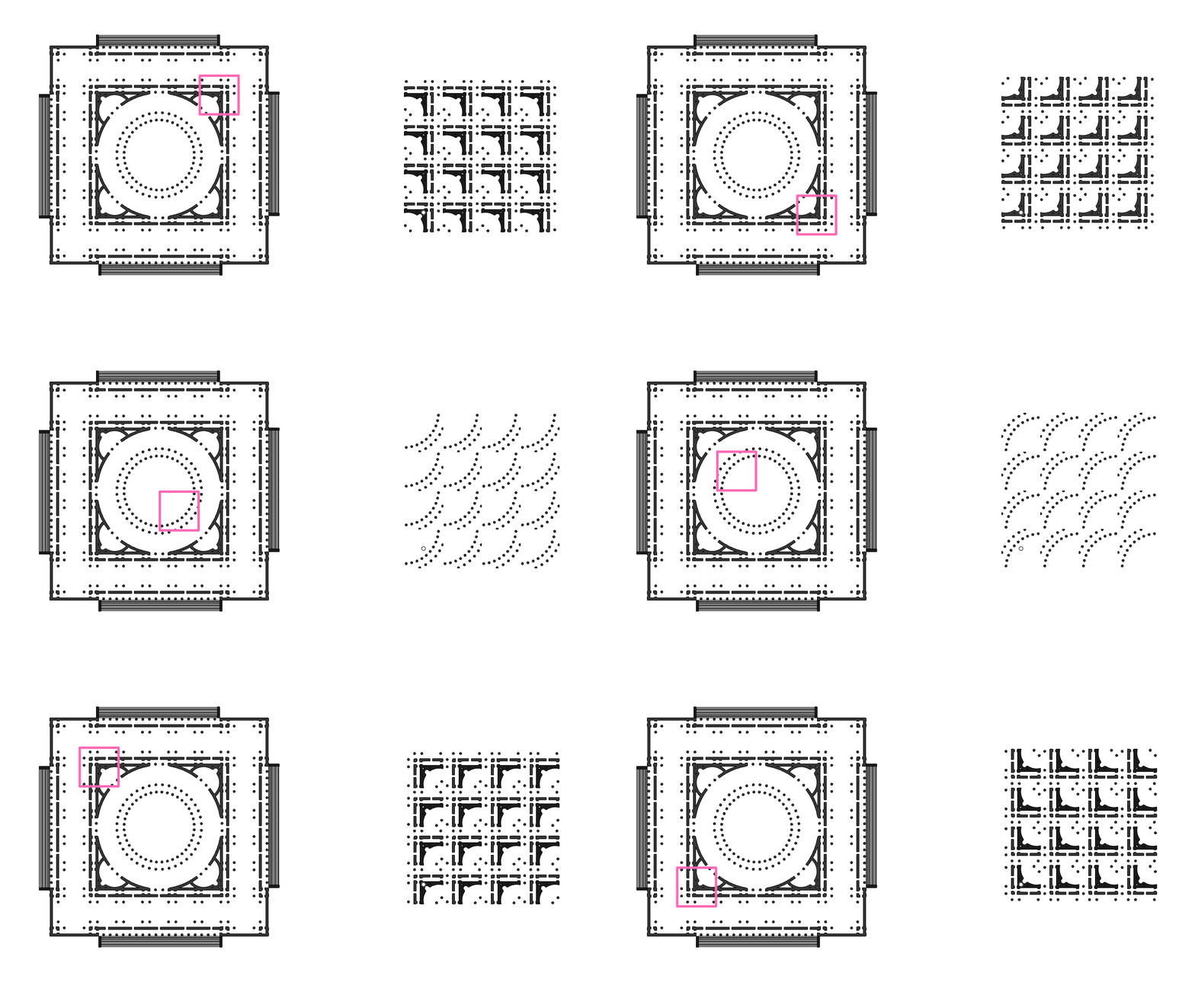
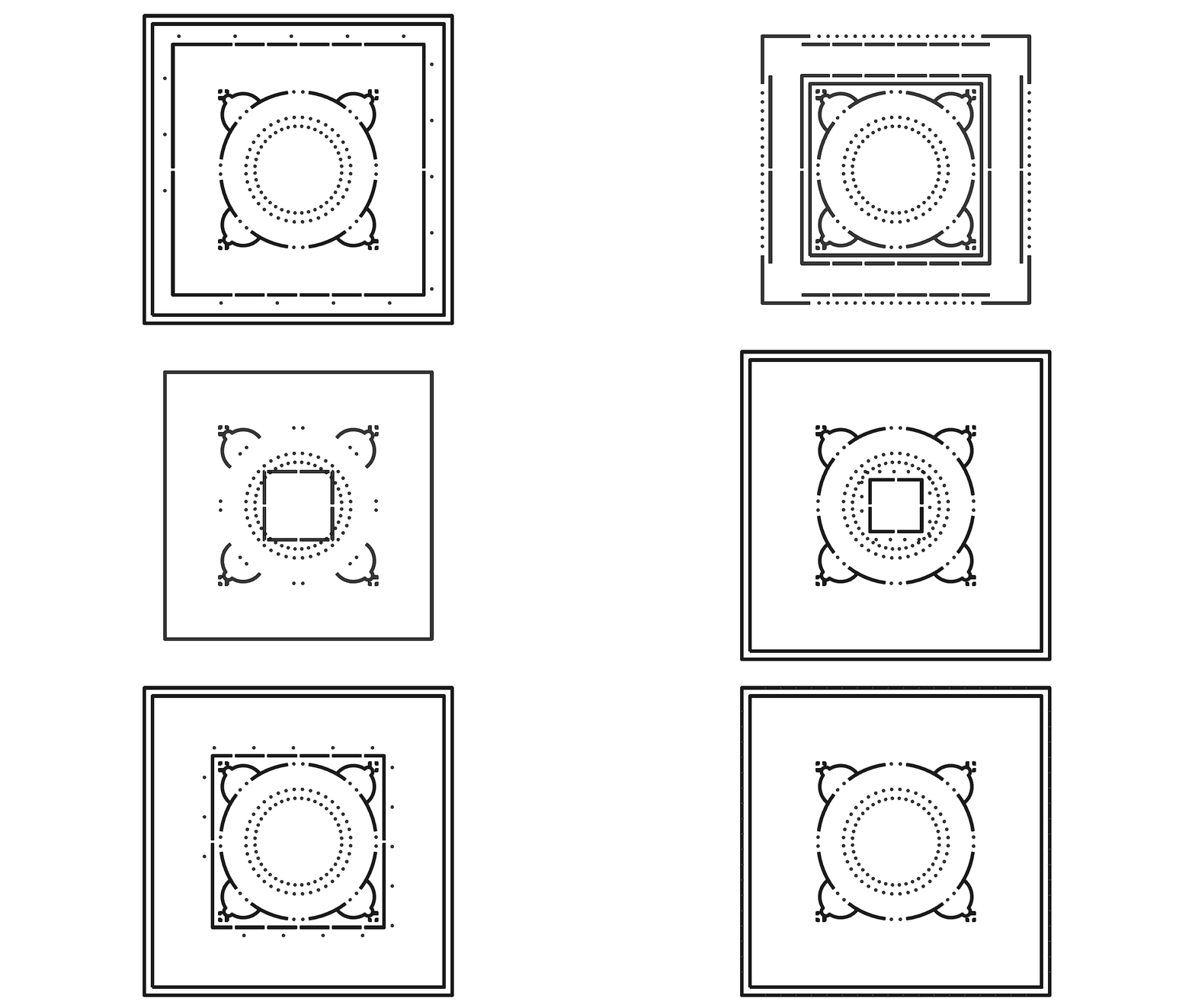
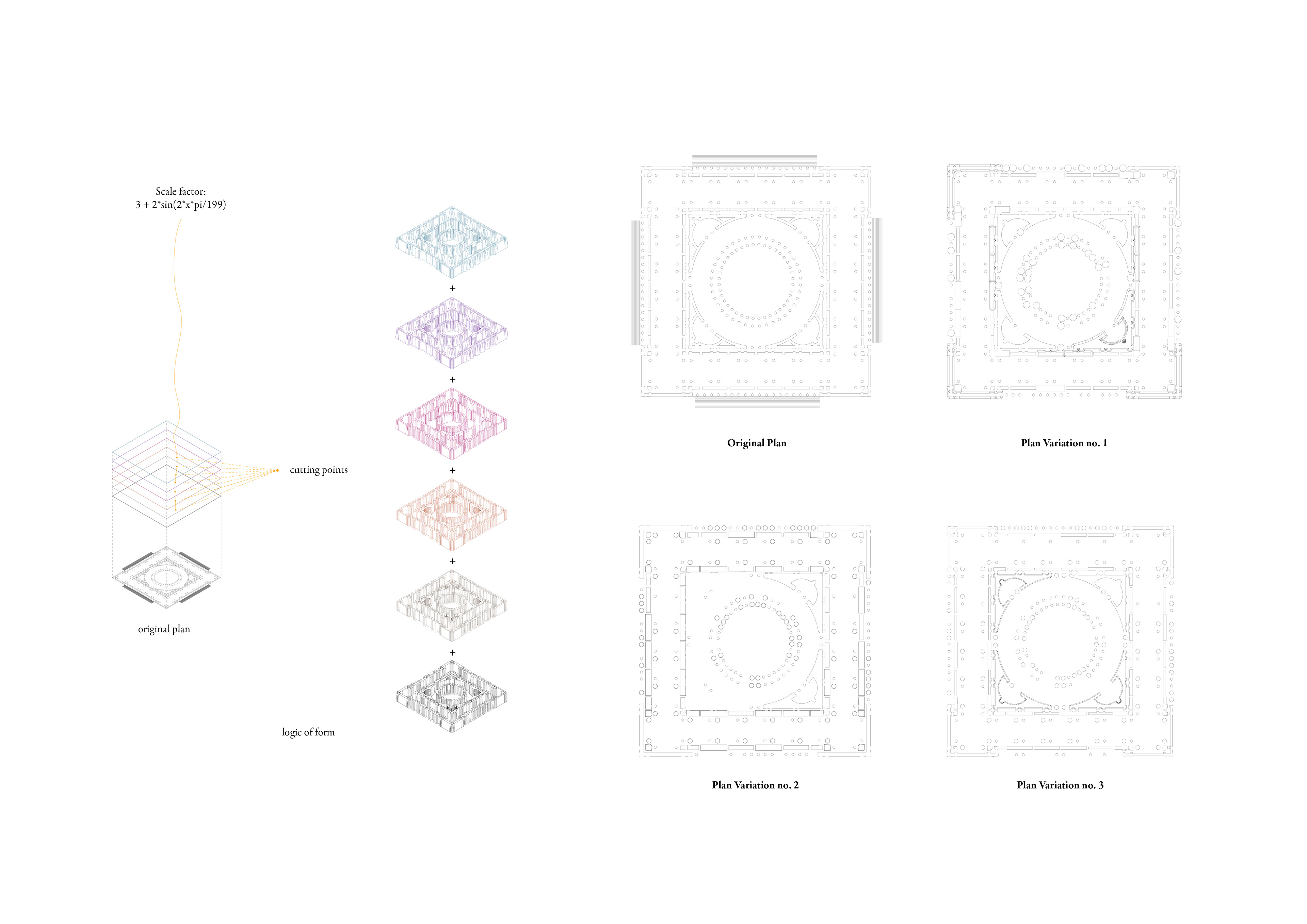
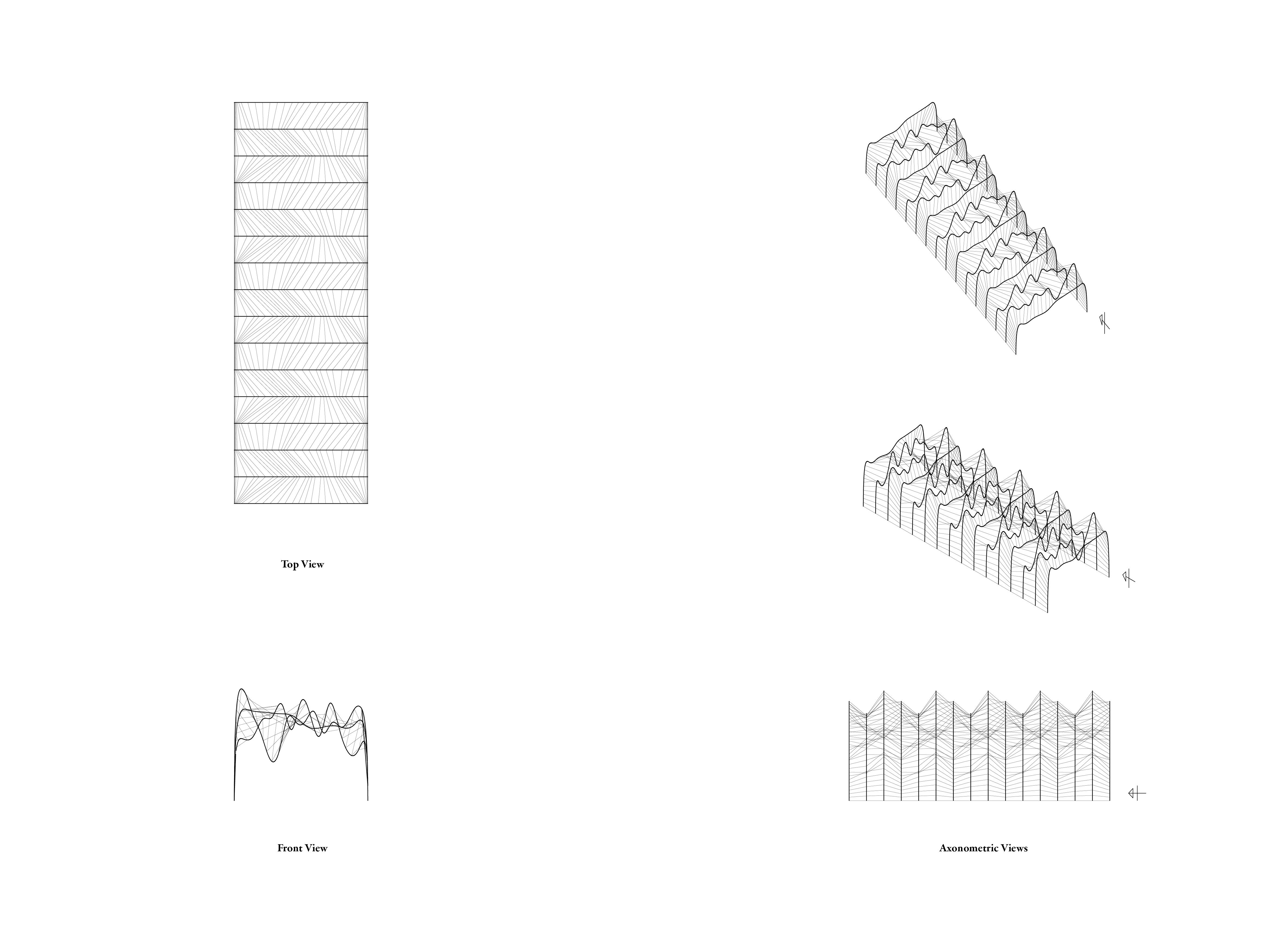
This phase explores the relationship between geometry and space by generating a 3D massing model derived from an original floor plan. The process involves segmenting the floor plan into layers at specific heights and manipulating each segment’s volume using a parametric equation: 3 + 2*sin(2x*pi/199). This equation governs the scaling and direction of curves, resulting in a diverse array of stacked volumes to create a cohesive yet dynamic structure. The outcome is a massing model that showcases unique orientations and spatial configurations, each reflecting the interaction between mathematical principles and architectural form.
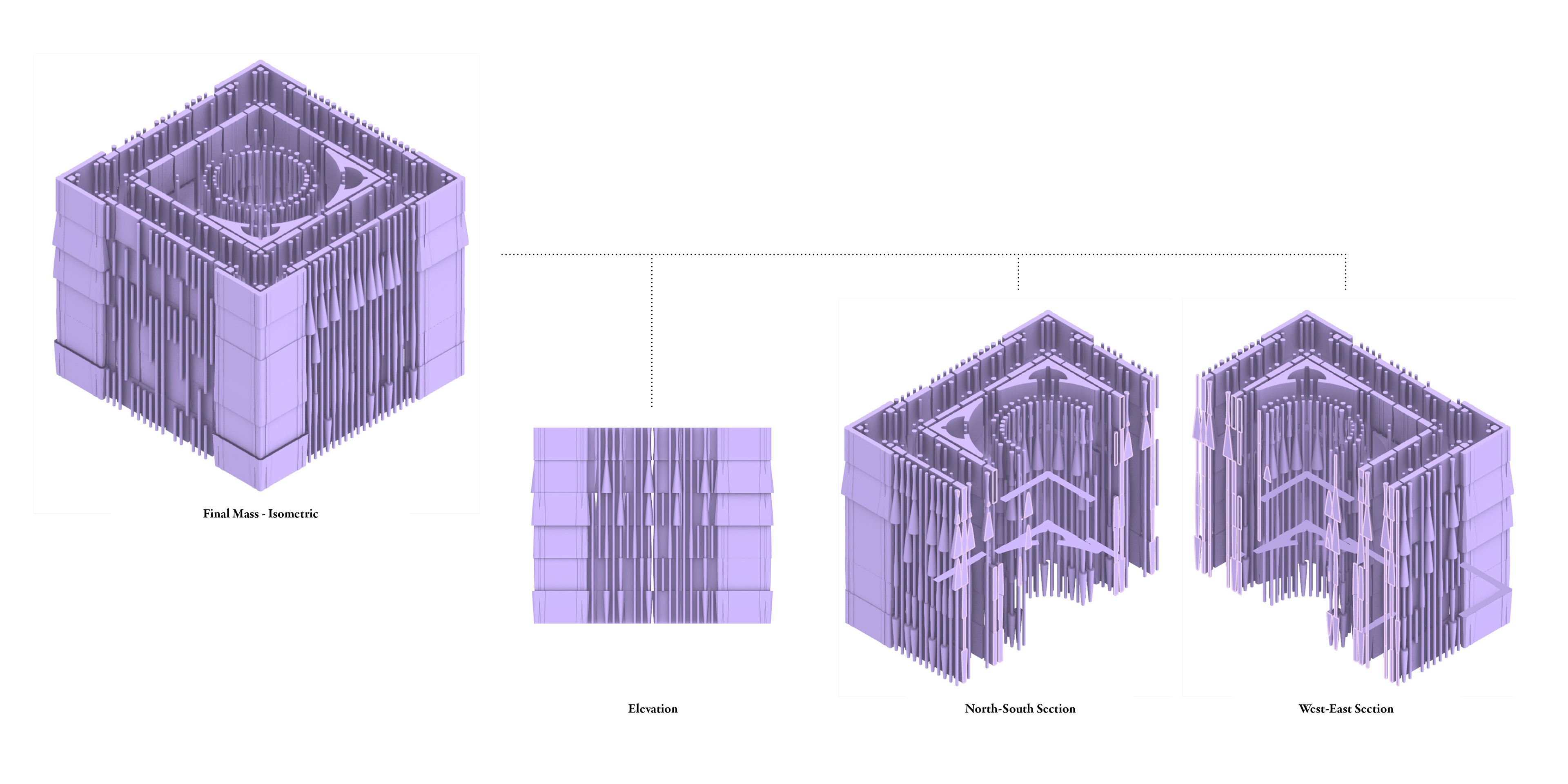

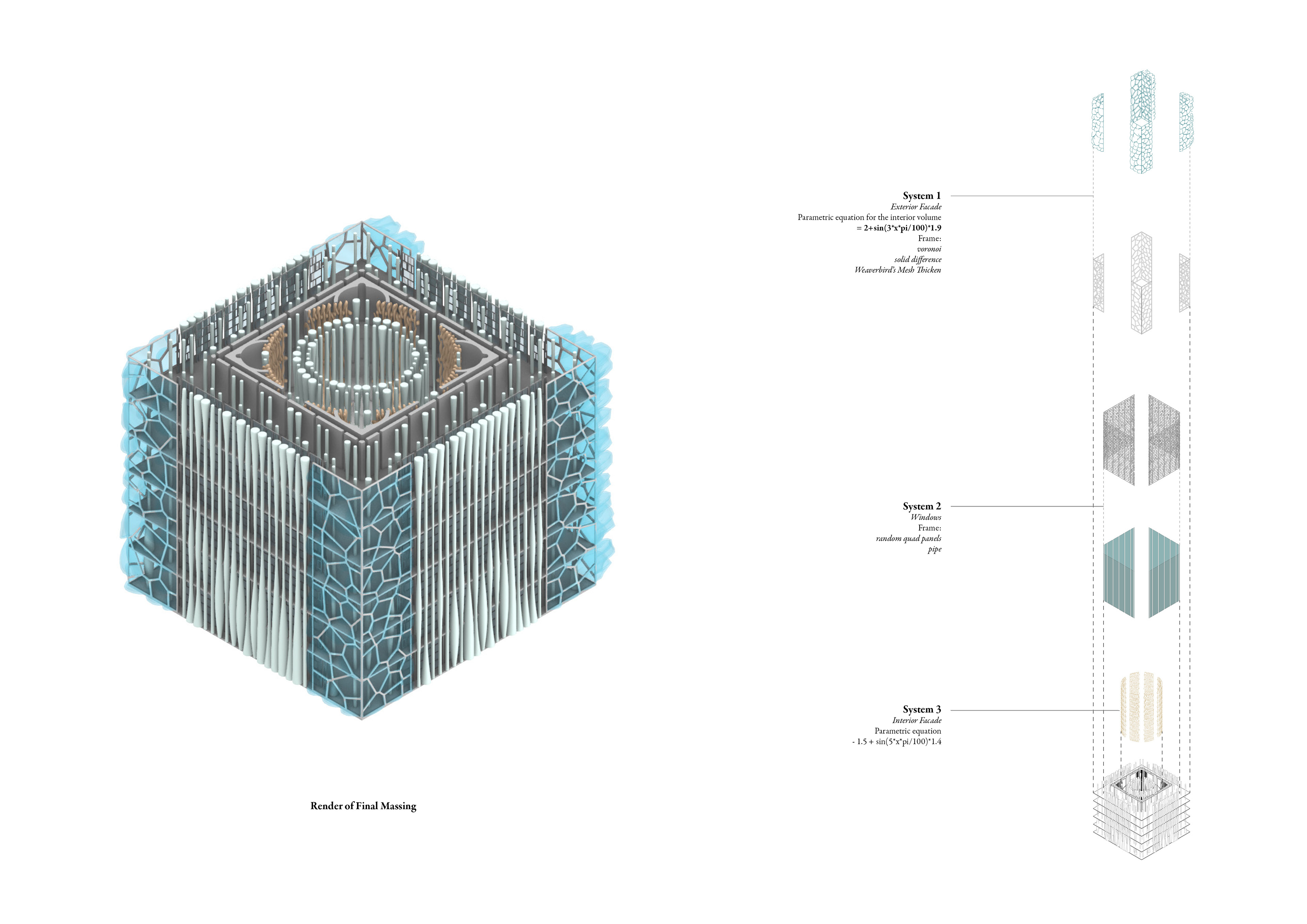
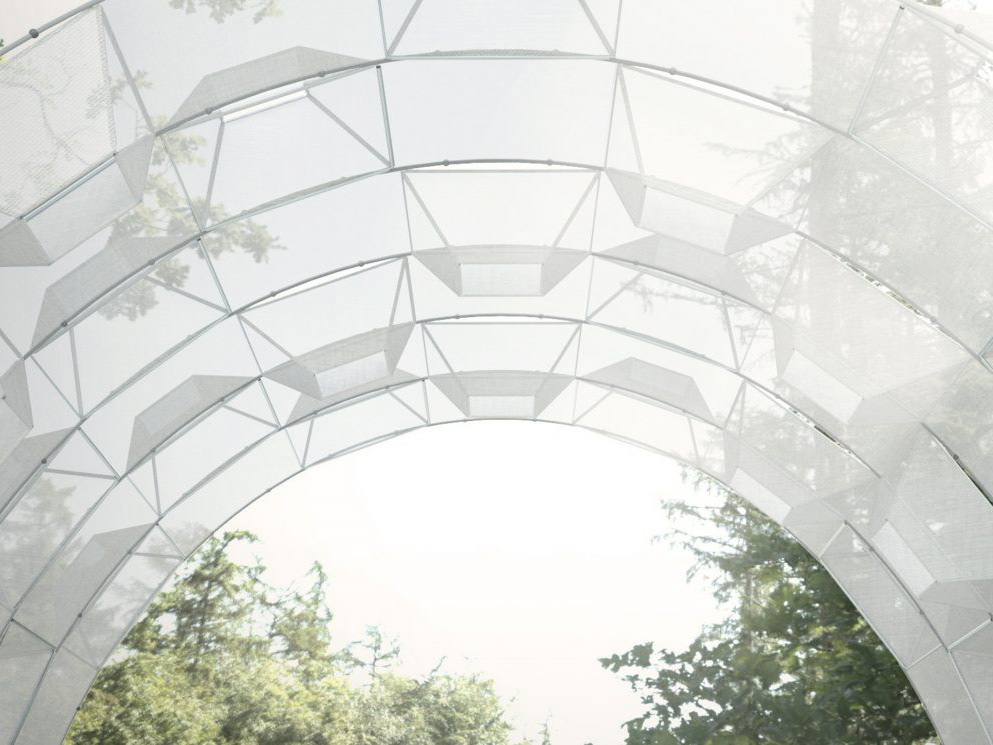
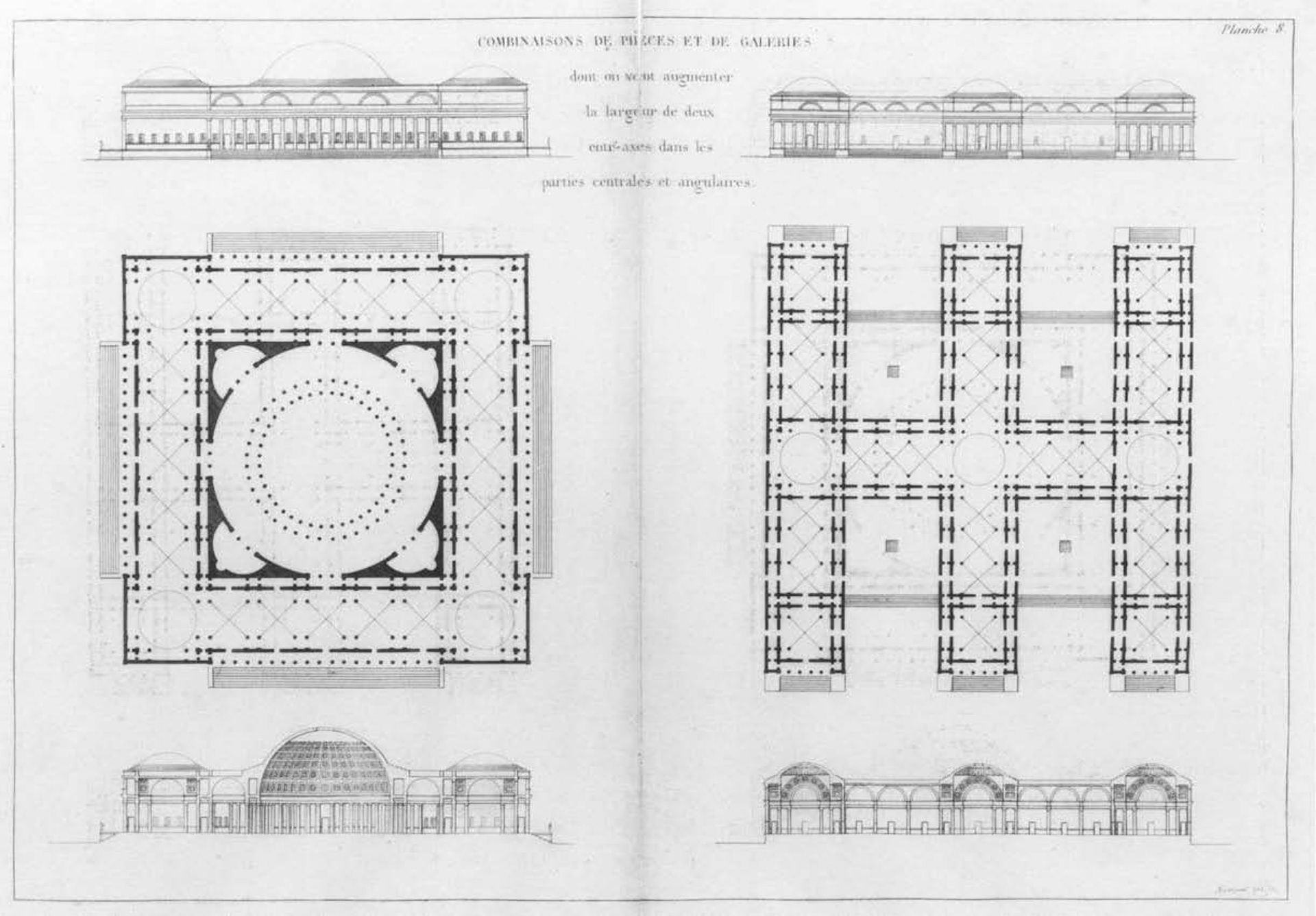
The proposal focuses on redefining the parametric logic of a selected architectural precedent, specifically examining the interactive roles of structural and facade systems. Using our 3D massing from assignment 4.2 as the foundation, we developed three distinct facade systems: an exterior façade, dynamic windows, and an interior facade. Each system interacts parametrically to shape the building’s form and spatial qualities.
The volume of the exterior facade is generated using the parametric equation = 2+sin(3*x*pi/100)*1.9 with a unique volume framework with tools like Grasshopper tools like Voronoi and Weaverbird’s Weaverbird’s Mesh Thicken. Dynamic windows utilize a Random Quad Panel tool and a Pipe system to wrap 3/4 of each building face, enhancing the structure’s flexibility and visual depth. Lastly, the interior facade was evaluated with the equation = 1.5+sin(5*x*- pi/100)*1.4, which encloses central openings, connecting the structural grid with volumetric variations that reveal the building’s internal spatial complexity.
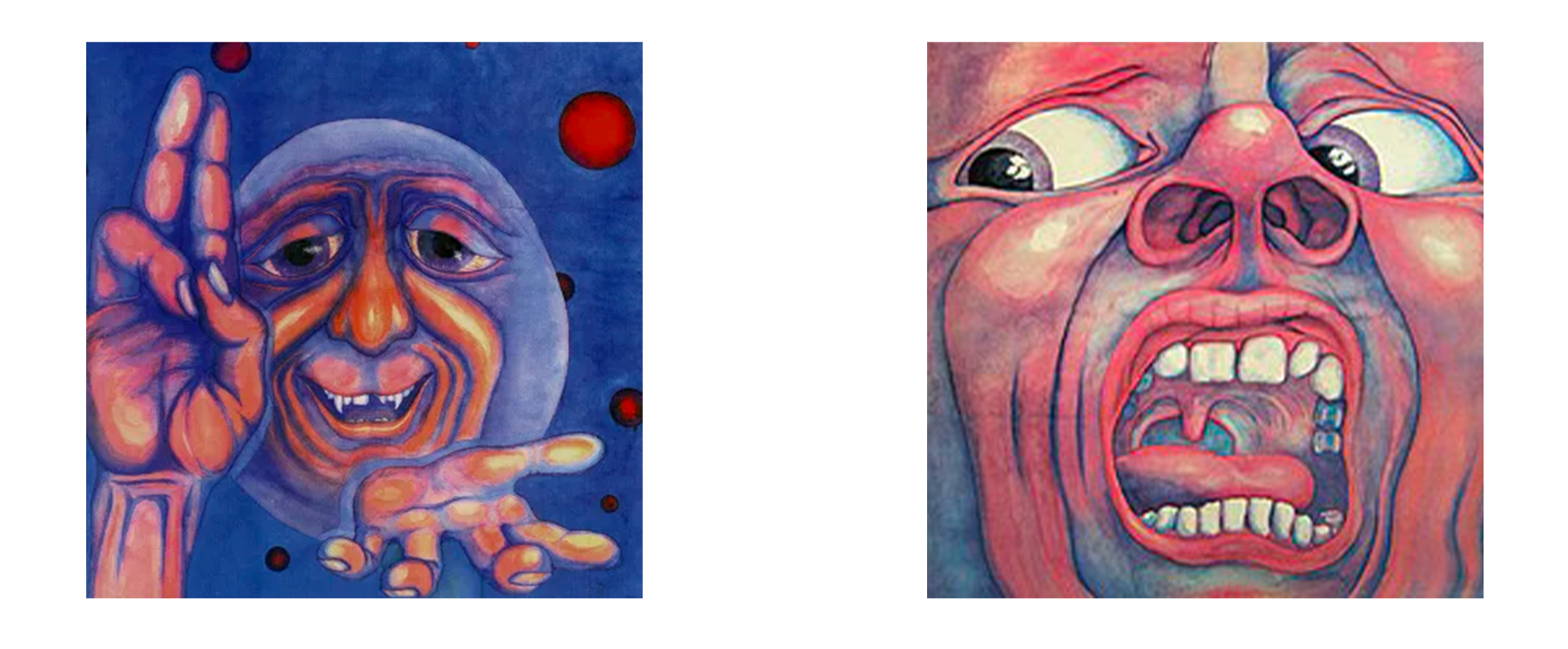
Left: the Crimson King, Right: the Schizoid Man
The Crimson King - "the ruler that enforces terror"
The face of the Crimson King appears on the inner gatefold cover, embodying the enigmatic and multifaceted character portrayed in the song “The Court of the Crimson King:’ The King’s expression is deceptively complex: at first glance, his wide, unsettling grin conveys an air of mirth or even malevolence, but upon closer inspection, his eyes reveal a deep sadness and weariness. This duality creates an emotional tension that mirrors the song's theme, where the Crimson King is both an awe-inspiring ruler and a tragic, isolated figure. The intricate details of the face, from the creases of the smile to the hollow melancholy of the eyes, invite viewers to explore the layers of meaning and emotion behind the King’s seemingly contradictory expression.
The Schizoid Man - "experiencing the terror of the modern age"
This image captures the haunting face of the Schizoid Man, whose distorted, grotesque appearance serves as a visual representation of the themes explored in the song “21st Century Schizoid Man:’ The close-up reveals exaggerated facial features: bulging eyes filled with an almost manic intensity and a wide, screaming mouth that seems to echo the chaos of the modern world. The harsh, raw expression on the face conveys a visceral sense of terror and alienation, symbolizing the paranoia, brutality, and dehumanization born out of war, rampant consumerism, and societal breakdown in mid-20th-century America. This image is a powerful encapsulation of the song’s critique of the fractured psyche of the modern age.
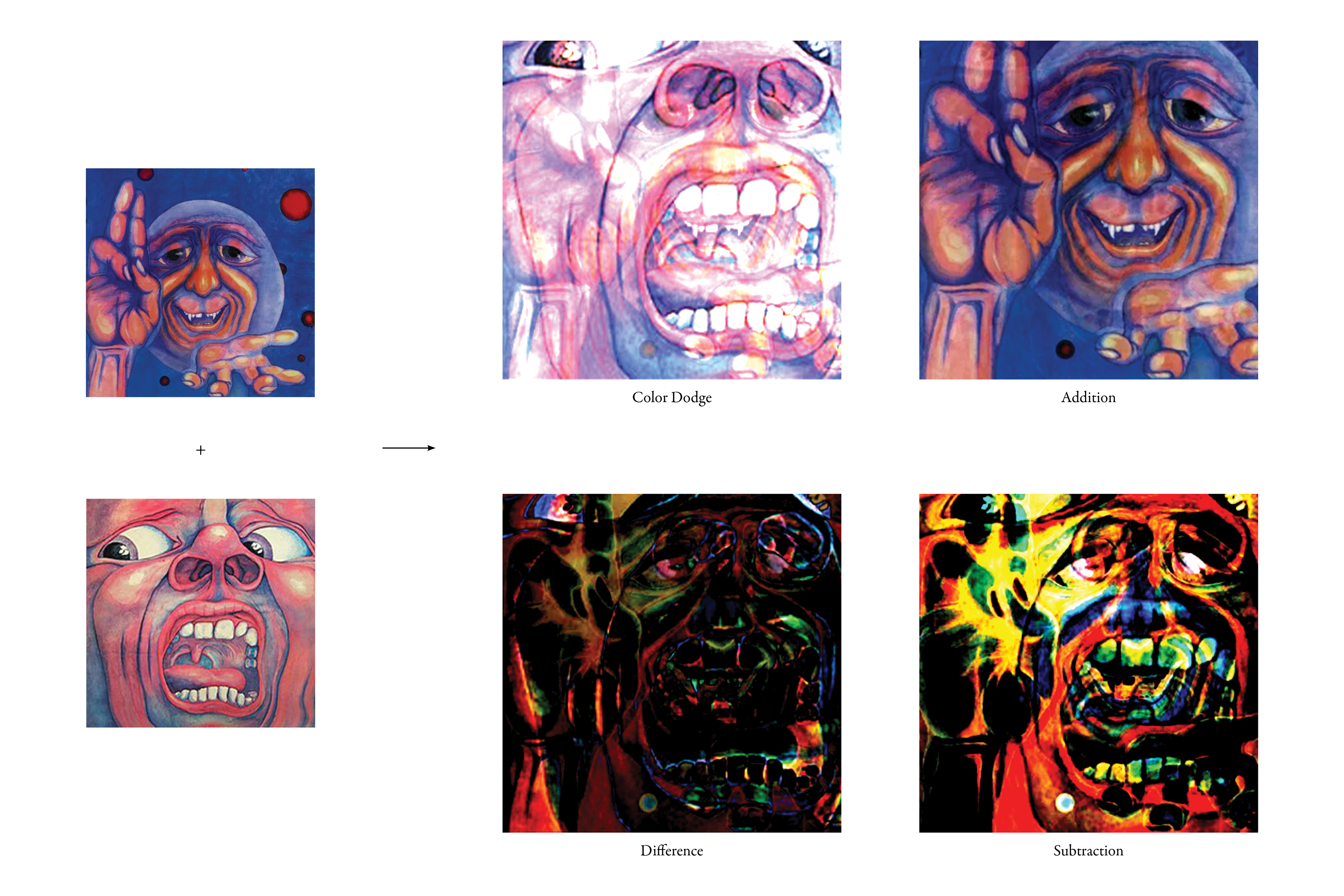
Image Mode: Variations
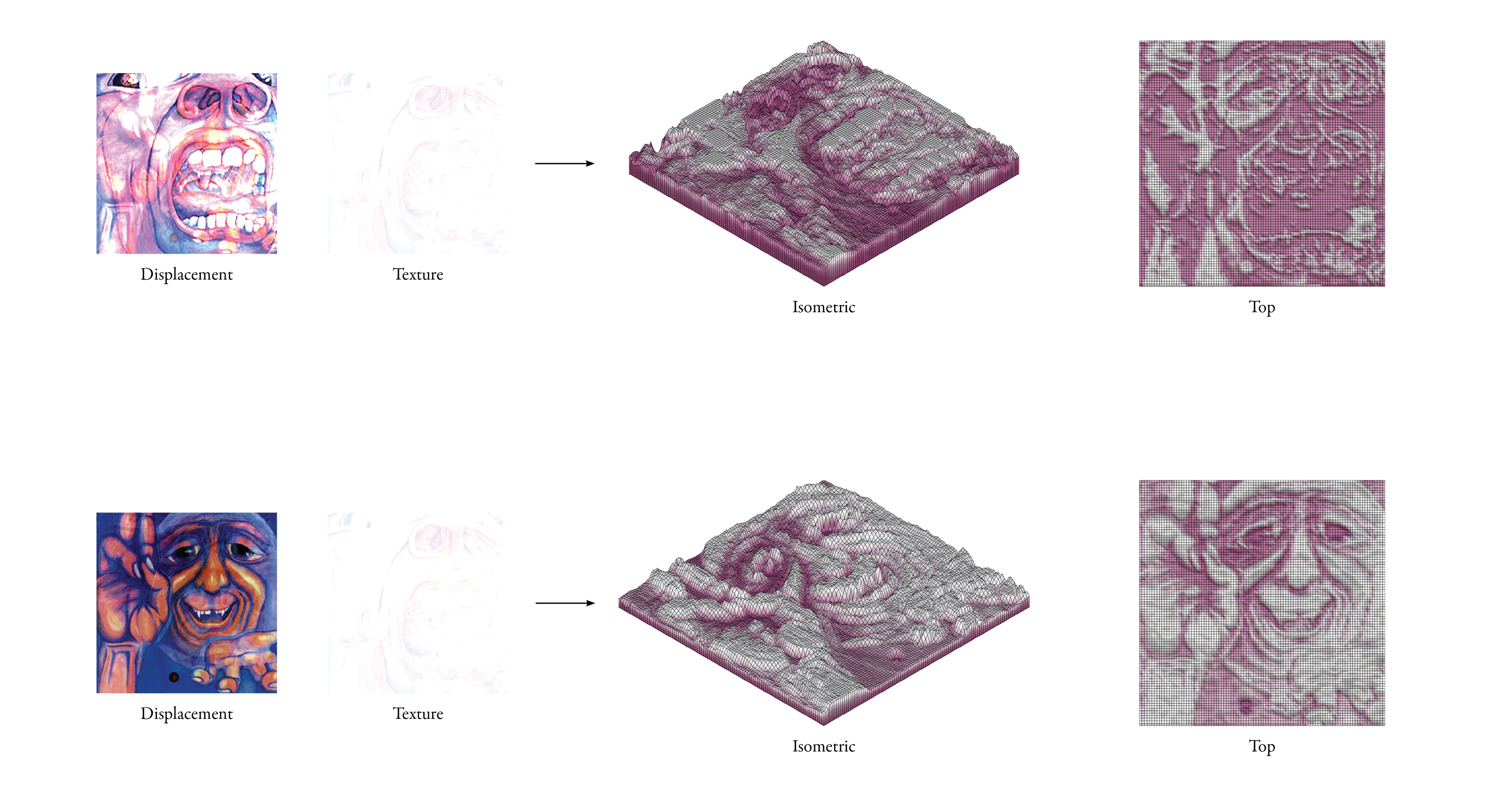
2D to 3D Mapping - Individual Panels
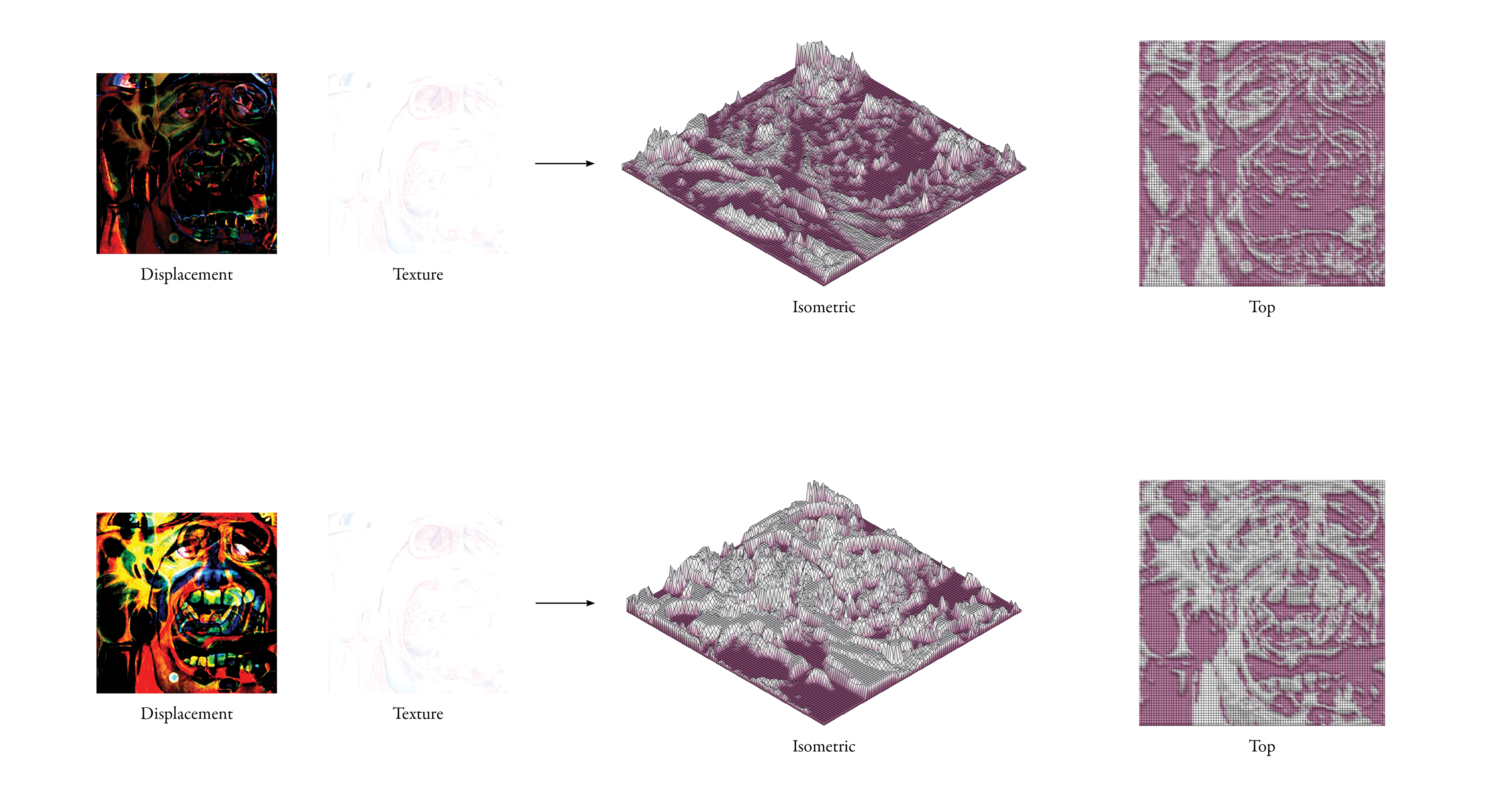
2D to 3D Mapping - Individual Panels
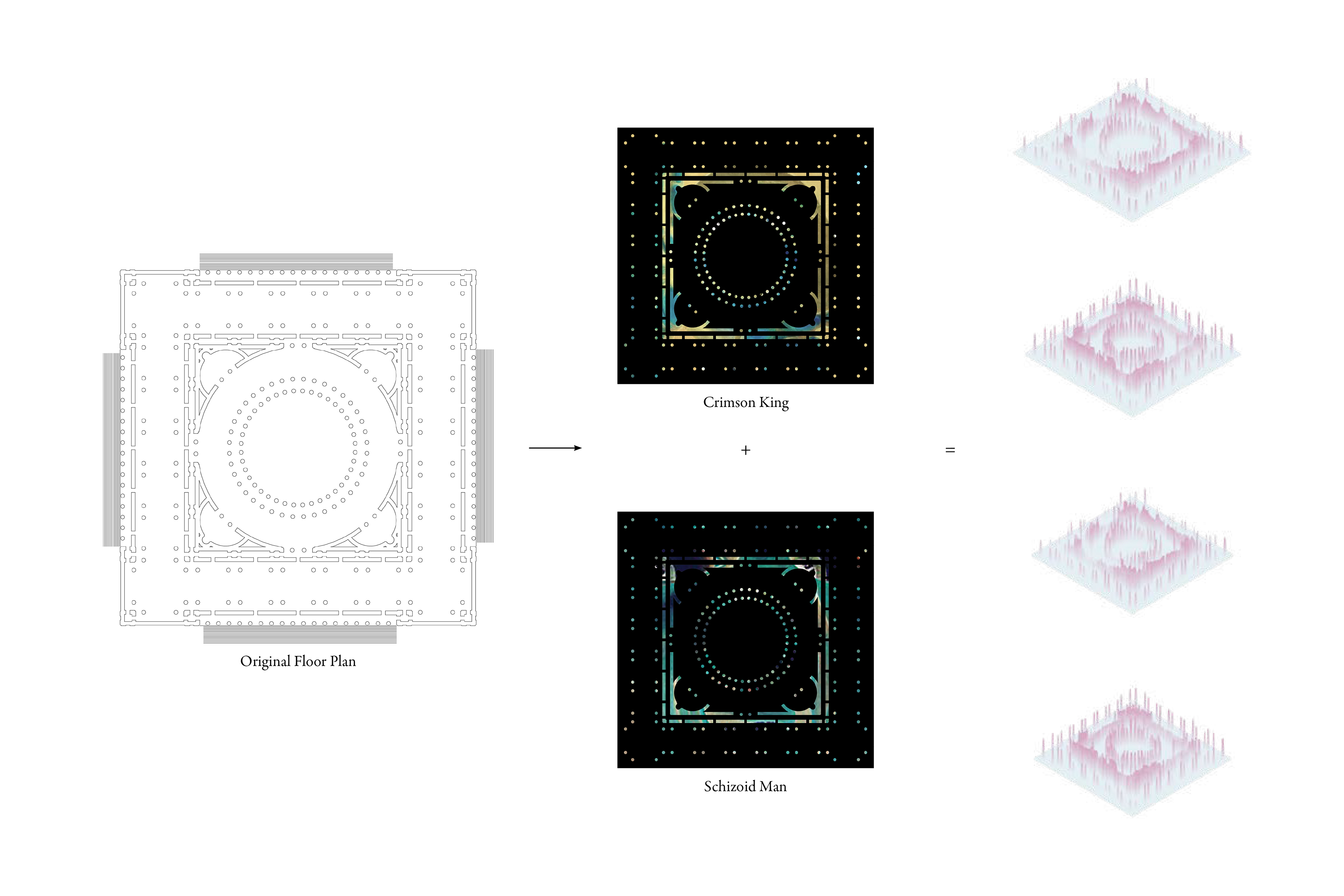
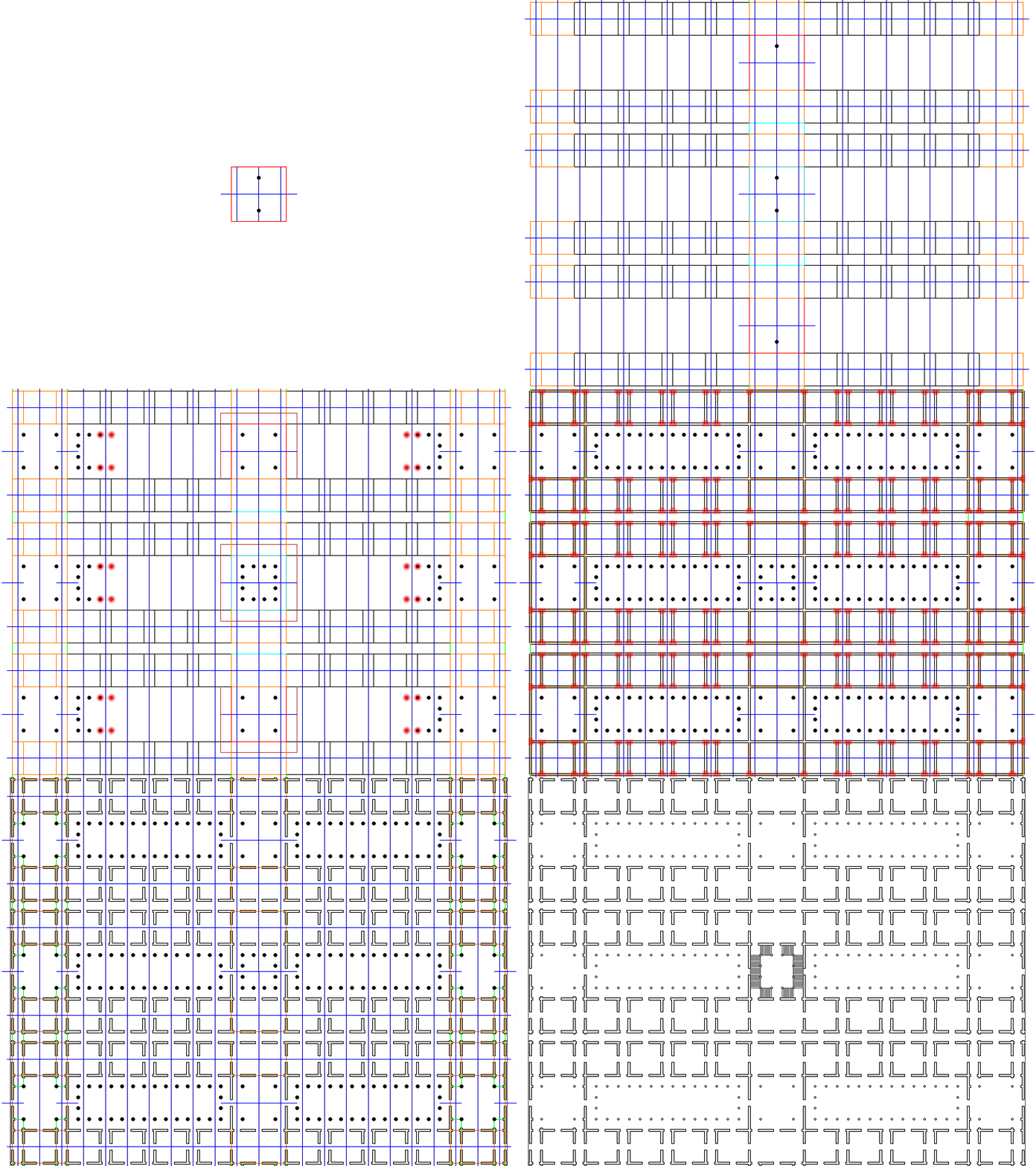
2D to 3D Mapping - Floor Plans
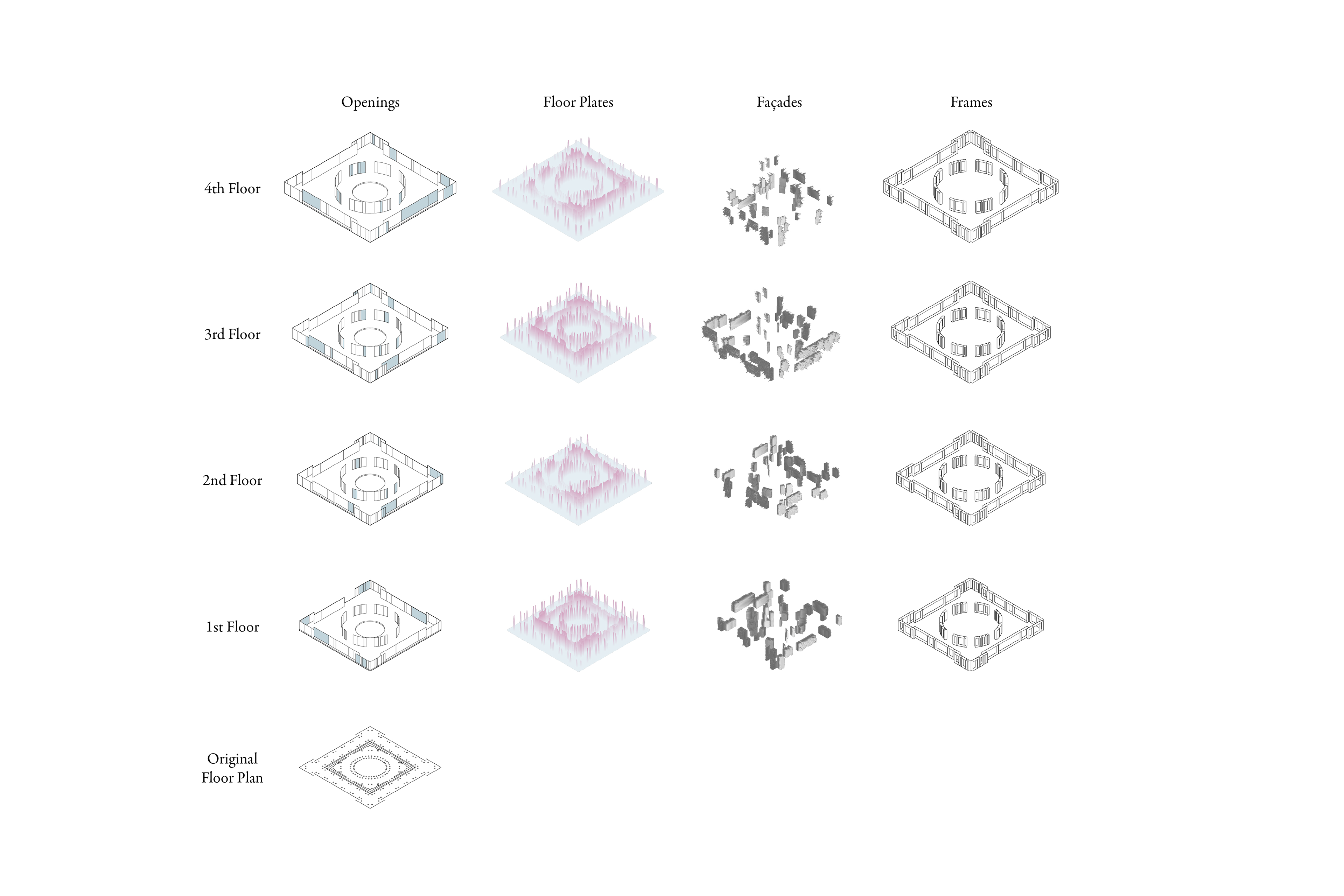
Exploded Axonometric Diagram
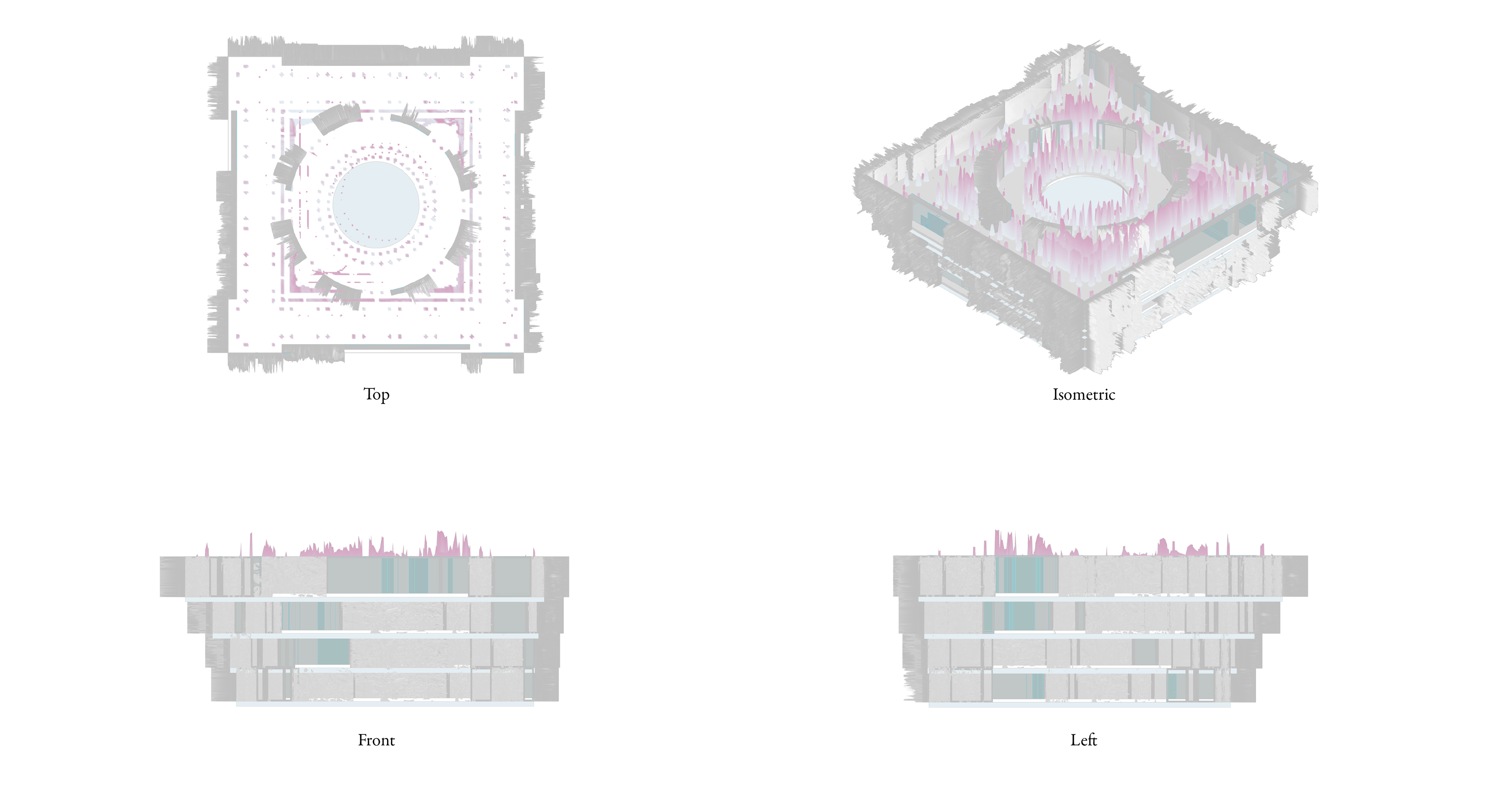
Results